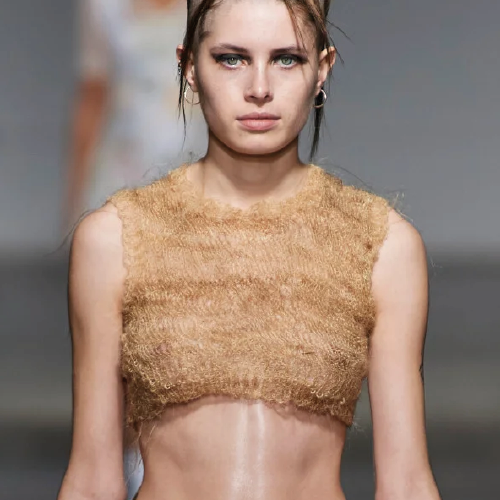
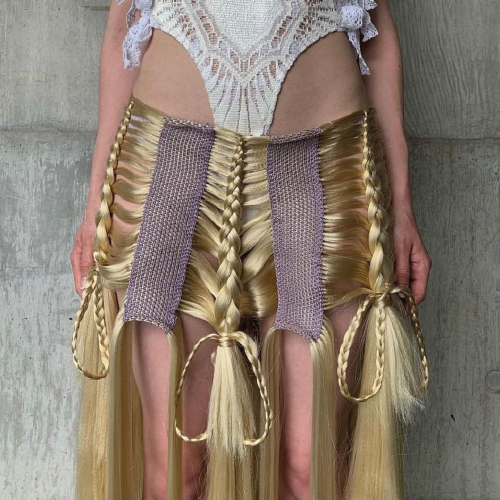
Human hair enters the design field as material.
Collected, processed and reassembled, it shifts from personal residue to constructive input. What was once intimate becomes surface: dense, irregular, tactile. A fibre that does not behave like textile, yet operates within it.
Across fashion, art and material research, this marks a precise transition. Biological matter is no longer peripheral. It becomes part of how garments are built.
The relevance sits in how materials are now activated. Hair introduces a category that escapes the natural versus synthetic divide. It carries inconsistency, memory and friction, shaping pieces through behaviour. Surfaces feel unstable, closer to skin than fabric.
At product level, this translates into clear applications: outer layers positioned between garment and object, accessories driven by tactile presence, trims and inserts replacing conventional fibres. The material defines the structure.
Looking forward, discarded organic elements enter the design process as viable inputs. Materials are selected for their capacity to transform. The boundary between body and product continues to blur, opening a more intimate material language.
visual reference: Gareth Wrighton, Antonin Mongin